

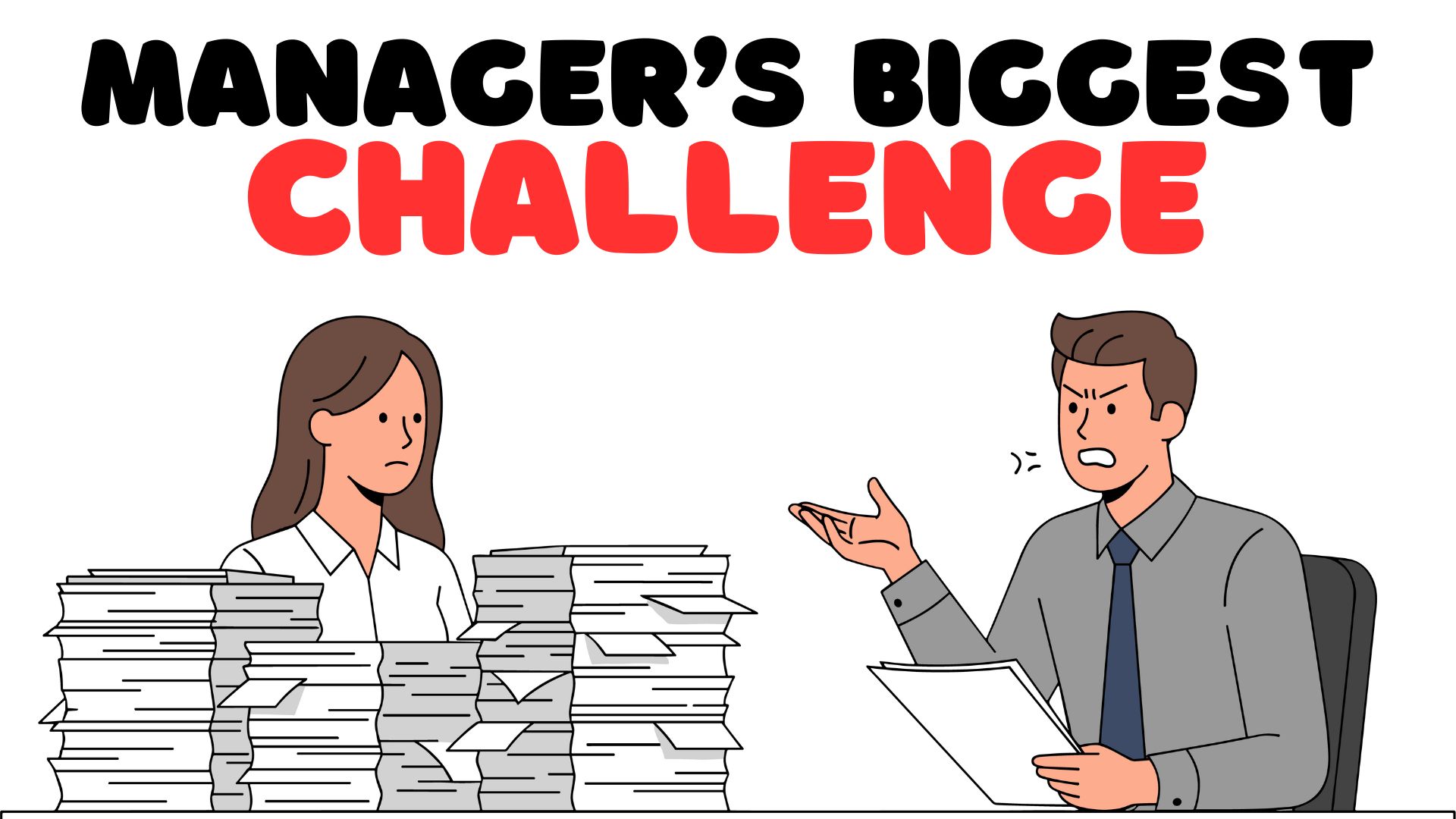
Every manager dreams of leading a motivated, positive, high-performing team…
But reality? You often walk into a workplace where ONE person can change the whole energy, who can turn a great day into a disaster with just one comment in a meeting?
The constant complainer. The Yes-Yes-Yes person who never delivers. The know-it-all who sucks the oxygen out of the room. The employee who treats you like their personal problem-solver. And the gossiper who spreads drama faster than any official update.
These people can drain your time, test your patience, and challenge your leadership. But here’s the good news: You don’t need to be the “perfect manager.” You just need the right approach. Great managers don’t avoid difficult employees. They turn them into their strongest assets.
Today, you’ll learn exactly how to manage these five difficult employee types — with relatable examples and practical tools you can use THIS WEEK.

1. Difficult Employee Or Hidden Issue?
Before we jump into the types, here’s the mindset shift that separates average managers from great ones:
Most difficult employees are not trying to be difficult. Their behavior is often a symptom of something deeper: A Workload imbalance, Poor communication, A skill/confidence gap, Lack of clarity, Feeling ignored, Or sometimes… old bad habits that were never corrected.
Your job is NOT to fix their personality. Your job is to: Give clarity. Hold standards. Guide behavior. And build accountability.
A great example: In the Last Dance documentary, Michael Jordan openly said:
He was “difficult” when the environment around him wasn’t aligned.
Remember this: People aren’t difficult. Sometimes situations make them difficult.
Leaders fix the situation.
2. The 5 Types of Difficult Employees & How to Manage Them:
There are five common types of difficult employees, each presenting unique challenges for managers. Addressing each type requires targeted strategies to foster a healthy and productive workplace.
Type 1: The Complainer.
This is the employee who always finds faults, sees problems in every solution, and spreads negativity.
Common traits: Always talks about what’s wrong, Rarely brings solutions, Lowers team morale.
New process? ‘This will never work.’
New project? ‘We don’t have time for this.’
Team update? ‘Management doesn’t know what they’re doing.’ Like that.
Why they behave this way: Sometimes they feel unheard. Sometimes this is just their coping mechanism. Sometimes they genuinely don’t know how to express concerns productively.
How to manage a Complainer: Use the “Solution Redirect Method.” Listen to their concerns respectfully, but encourage constructive feedback and require them to suggest solutions rather than just vent complaints. Schedule structured feedback times to prevent constant interruptions and maintain accountability for their input and turn complaints into ownership.
Example approach: “I hear your concern. What solution do you suggest?”
Most complainers stop complaining when they’re required to offer solutions.
For Example: In a retail store, one employee kept saying the new billing software was “terrible.” The manager sat with him and said: “List three things you dislike and three ways we could improve your experience.” The employee ended up giving practical suggestions — and stopped complaining because he felt heard.
Key idea: Complaints can be useful data. But your job is to channel them into improvements, not let them poison the culture.
Type 2: The Yes-Person.
Always agrees to everything… then fail to deliver or might avoid sharing true opinions. They want to impress, avoid conflict, or be liked.
Common traits: Can’t say no, Overpromises, Misses deadlines, Wants to please everyone. Like,
“Yes, I can do it.”
“Yes, no problem.”
“Yes, I understand.”
But later, you discover missed deadlines, incomplete work, or hidden stress. Over time, you can’t rely on their ‘yes’.
Why they behave this way: Fear of disappointing you or trying too hard to please.
How to manage a Yes-Person: Teach them to prioritize realistically, Encourage them to say “no” when needed, Set deadlines with mutual agreement, Review workload weekly.
Example approach: “Before you take this task, show me what you’re currently working on. And what support do you need?”
This forces realism, not blind agreement.
For Example: A marketing executive kept accepting every new assignment.
Work piled up, deadlines were missed. The manager introduced a weekly priority check-in. Result? Less overwhelm + better output.
Sometimes a “yes person” doesn’t need control —they need structure.
Key idea: You must train Yes‑people to be realistic, not just agreeable. Reliable delivery is what matters. Yes is good. But Smart yes is better.
Type 3: The Know-It-All.
They believe they are always right — even when wrong. They challenge decisions, argue, and resist feedback. They might be talented but can be toxic if not managed.
Common traits: Interrupts others, Doesn’t accept criticism, Wants to dominate conversations, Undermines leadership.
Why they behave this way: They want to feel important. Maybe they feel insecure.
Or maybe they genuinely have expertise — but lack emotional intelligence.
How to manage a Know-It-All: Acknowledge their expertise appropriately, but set boundaries for contributions. Stick to facts, not emotions, Ask data-backed questions, Don’t get into arguments, Provide feedback in private with clear examples.
Example approach: “I appreciate your knowledge. Let’s compare your suggestion with our data and decide together.”
You respect them — but stay in control. This disarms ego without confrontation.
Also Focus on behavior, not personality:
Behavior like: interrupts, dismisses, uses harsh language.
Impact: discourages others and reduces innovation.
Channel the ego into mentoring: If they’re truly skilled, give them responsibility that requires them to lift others.
Example approach: “I’d like you to mentor two junior developers. Your success won’t just be measured on your code, but on how much they grow under your guidance.”
This reframes status: from “I know more than you” to “I help others grow.”
Key idea: Don’t crush their confidence, but don’t let them control the room. Redirect it so their strength helps the team instead of hurting it.
Type 4: The Employee Who Wants You to Solve All Their Problems.
This person lacks initiative and comes to you for every tiny decision. They rarely think through options and become dependent on you.
Common traits: Low confidence, Fear of making mistakes, Depends heavily on the manager, Slows productivity.
Why they behave this way: Fear of mistakes. Low confidence. Or a habit built from previous managers who spoon-fed instructions.
How to manage them: Ask guiding questions instead of giving answers, Assign decision-making responsibilities, Set “decision boundaries”, Build their confidence with gradual autonomy. Also check for skill gaps: Maybe they genuinely don’t know.
Give training, templates and samples.
Example approach: “What do you think is the best solution? Walk me through your options.”
When they realize you won’t solve everything for them, they start solving things themselves. Over time, they stop relying on you for everything.
For Example: At Walmart, managers give employees “decision limits” —allowing them to make decisions under certain criteria, without asking.
Instant maturity boost.
Key idea: Your goal is to create thinkers, not followers. Gradually shift them from “Here’s a problem” to “Here’s the problem and here’s my proposed solution.”
Type 5: The Gossiper.
The gossiper spreads rumors, exaggerates stories, and talks about people instead of talking to them. They can seriously damage team trust and culture.
Common traits: Talks about coworkers behind their backs, Creates cliques, Spreads half-information, Distracts others.
Why they behave this way: They want attention, They feel insecure, They enjoy emotional chaos, They misunderstand professional boundaries.
How to manage a Gossiper: Address gossip immediately and privately, Set zero-tolerance boundaries, Shift them toward positive communication, Document repeated patterns, and reinforce company policies on workplace behavior. Don’t participate, If they start gossiping to you, cut it off politely but firmly.
Example approach: “I’ve noticed conversations happening outside the team that are affecting trust. From now on, let’s keep discussions factual and work-focused.”
If behavior continues → HR involvement may be required.
Be clear that this is not just a “preference” – it’s a behavior issue.
Shift them to constructive communication
Key idea: Culture is what you allow. Set a clear standard and lead by example. If you let gossip slide, you’re silently approving it.
3. The Step-by-Step Framework to Manage ANY Difficult Employee:
Managing a difficult employee requires a structured and empathetic approach, focusing on open communication, clear expectations, consistent standards, and ongoing feedback. Here’s a simple framework you can apply to ANY difficult behavior—not just these five types.
1. Observe the exact behavior: Not feelings. Not assumptions. Facts.
2. Understand what’s driving it: Ask yourself: Is this a skill issue, a confidence issue, or an attitude issue? Is there a workload, clarity, or support problem?
3. Discuss privately: What you observed, The impact, Their point of view. And Never address issues publicly.
4. Agree on change: What changes? By when? How will it be measured?
5: Provide Support: This builds trust. Offer: training, tools, coaching, resources.
6. Follow up consistently: Improvement needs monitoring. Check progress weekly or biweekly. Consistency turns one tough conversation into real behavior change.
Consistency > intensity.
Conclusion:
Difficult employees aren’t roadblocks—they’re tests. And every great manager learns to pass them with: Boundaries, Clarity, Conversation, And the right tools. Lead with confidence. Lead with clarity. And watch your team transform.